

Today’s labor costs have been increasing monumentally compared to rates in the past. The world of construction has been growing and changing as time goes on, with new benefits and challenges that the industry now faces. In this blog, you’ll learn about the history of labor prices, the costs of today, and be informed on ways to save your money. Let’s talk about factors that contribute to labor costs.
History of Labor Costs
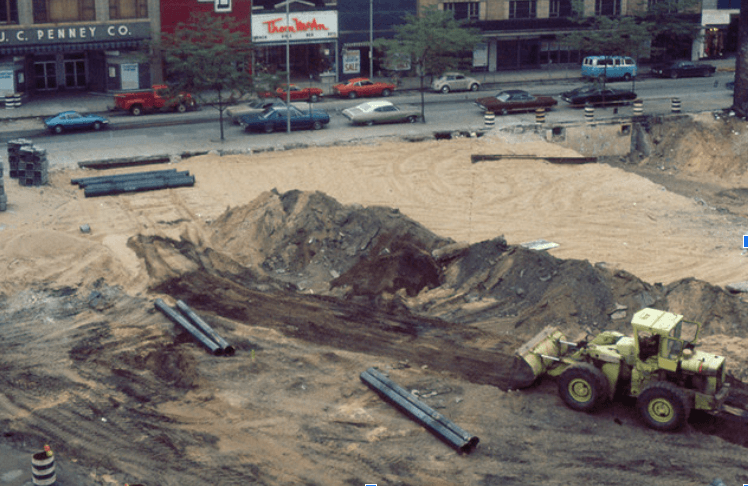
In the early 1970s, construction was starting to explore differences of materials, architecture, and began to prioritize safety. That said, asbestos was used often in this time due to the fire resistance and because it was a cheap option. 50 years ago, the construction industry was worth less than 100 billion in the United States private residential sector (according to Statista). OSHA had just been formed in April of 1971. People were unionizing and were gaining protections within the workplace. The U.S. Department of Labor offers records of payments at that time with the minimum wage being $1.60 in 1970. By the end of 1979, wages were raised to $3.10 for all covered, nonexempt workers. That’s an increase of 93.75% from the beginning wage in a span of less than a decade!
Inflation Through the Decades
The CPI Inflation Calculator created by the U.S. Department of Labor Statistics estimates it would take $8.59 in September 2025 to have the same buying power as a dollar in January 1970. Needless to say, inflation has significantly skyrocketed and that change is reflected in the prices of today. Although not every year was consistent in the inflation rate, the total percentage of change from then to now is 88.36% which is nearly double.
Prices of Today
Today, labor costs include more than ever. Payroll, insurance, benefits, unemployment costs, social security and other taxes all add up quickly for employers. Not to mention payroll can vary greatly based on a number of factors that pertain to the workers they hire, hours they work, and what capabilities they have. Unionized workers and skilled professionals can increase the costs but often are well worth the investment due to the expertise they bring to a team. Those numbers do not factor in overtime, costs of weather delays, permits, tools, and other miscellaneous expenses. With a multitude of charges that are hourly or by project, it’s even harder to scale labor costs to larger projects. For good blogs about these costs in depth, check out Workyard or Builtfront.
Fun facts
- Most beginners are paid $15 an hour while specialized tradesmen and specialized tradeswomen can earn up to $55. Supervisors often charge within that range.
- Prices for permits change by area, with different municipalities also having additional requirements.
- Taxes consider how much work was done in total or how many hours went into a project.
- By always prioritizing safety, companies can save money from the potential fees.
Ways to Save Your Money
Due to higher operational costs, a greater amount of money is required to sustain a business. That is why businesses should take these tips to improve their workforce and save themselves both time and money.
- No HR? Get Gusto! It’s an all in one program for payroll, human resources, and more that has offerings for smaller businesses.
- Not tracking to-dos? Try Trello! Manage your to-dos so each item gets to-done. This also offers a planner function and a variety of functions to make organization efficient.
- No social media? Create on Canva! Whether utilizing the free or paid version, you can create almost anything you’d need from posts to infographics and order printed versions on site!
- No dedicated workspace? Gather through Google Workspace! Offering work emails, documents, sheets, and almost everything else in one place, Google covers many bases.

Final Thoughts
Human ingenuity will ultimately prevail, even in the face of rising costs and high inflation. Within the upcoming years, new innovations and materials will give way to new technologies and practices that will make a safer and more efficient work environment. There will always be a need for skilled workers as well as the need to pay them, but it could look different during the next half a century. Start making beneficial changes now to secure your future, enabling you to save money and set the stage for success in your upcoming projects. Additionally, when employers add benefit programs or incentives employee satisfaction skyrockets. Remember that it takes happy workers to have a happy customer.
Conclusion
By reading through this blog you have a better understanding of what it takes to pay for labor as a whole. You are now informed about hourly wage, skilled labor, and more pertaining to the current labor costs in construction. If you have any questions regarding HR or other app recommendations, please reach out to [email protected] to hear from our team about options we use and love!
Resources:
- Why managing labor costs isn’t (only) about wages — it’s about systems | Trimble Resource Center
- How to Calculate Labor Cost in Construction (Formula & Easy Guide) - Builtfront Blog
- Labor Costs in Construction: A Comprehensive Guide
- Average Construction Labor Cost Per Hour: An in-Depth Analysis 2025 – LatestCost – Real-Time Price Insights
- How to calculate labor cost in construction
- Statista - I am unable to link this, as it is a paid reference
- U.S. Construction Industry Data (Updated November 2025)
- Current Employment Statistics - CES (National) : U.S. Bureau of Labor Statistics
- Bureau of Labor Statistics Data
- Construction in the 1970s | Natta
- Vintage or Viable? Assessing the Build Quality of 1970s Houses - Brilliantio
- History of Federal Minimum Wage Rates Under the Fair Labor Standards Act, 1938 - 2009 | U.S. Department of Labor
- CPI Inflation Calculator
0 Comments