

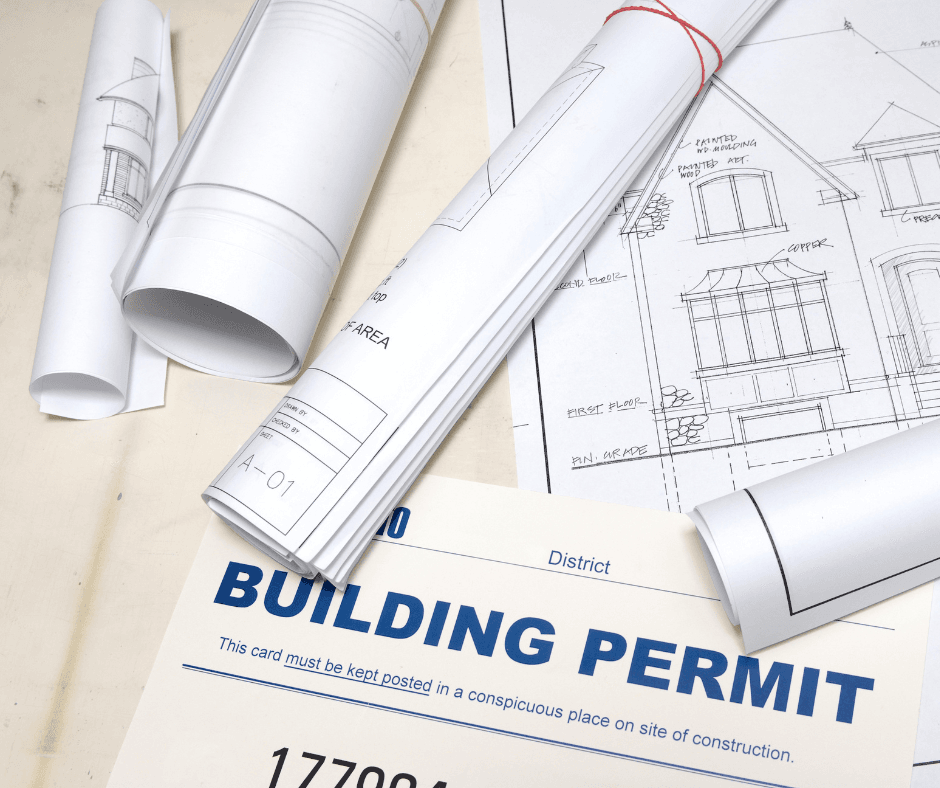
Permits are the necessary starting point for any construction project. Gaining permission from your county for your project can stop future fees, or issues regarding the local government near you. Permits exist as a legal requirement not only to ensure work being done correctly but to ensure your home is safe and up to code to the area you live in. Furthermore, many financial institutions may decline to offer a loan or other financing to cover the project's expenses if the necessary permits have not been secured. Regardless of what you are building, there are permits catering to your project’s design and construction. This blog will explore the basics of permits, what could happen without one, different requirements, as well as tips to take with you.
Permit Basics
Please note that permit requirements are not universal; they vary based on the state, local policies and codes, the project's scope, and the specific type of construction. Down below are examples of types of permits, but it’s important to be aware that your specific area could have different permitting rules. Additionally, whether building from scratch or having a renovation, many of these permits could be applicable to you. Always check with your local building code.
Types of Permits
Commercial Permits - This permit applies to commercial spaces, which is any space that holds any business. Additionally, it would not apply to living spaces for people, as those count as residential builds.
Environmental Permits - Depending on your specific county, you might find that you’re required to get an environmental permit to protect your build from being fined or otherwise denied. Some places with extreme weather conditions also have environmental permits to make sure construction is adhering to climate regulations.
Multifamily Permits - This option is in between residential and commercial permits. These buildings tend to be apartment buildings and other residential living spaces that would be generating income for the owner. This category also includes condos, hotels, and more.
Residential Permits - Any single living quarters that would be a private residence, usually a single family residence. These permits tend to be very common and easier to obtain than multifamily or commercial.
Specialized Permits - These permits are the catch all that do not apply to any specific category of permit. This permit usually has various options underneath it that have unique specifications. A good example of this would be a Foundation-Only Permit, which is just what it sounds like. It specifically covers only the foundation on a project.
Trade Permits - These permits are specifically for trade work and are necessary to ensure the tradesman's work is up to standard and that the working environment is safe. The details of this permit are often the most important, since all the trades can lead to larger issues down the road if they are not properly installed.
Here are common examples of trade permits:
- Electrical Permits
- Demolition Permits
- Mechanical Permits
- Plumbing Permits
Application Process
In Pennsylvania, most local counties have the option to submit a permit application in person, through mail via paper, and online with the use of technology. Each specific county has information regarding permits and the like on their websites. In most cases, it’s simple to look up your county’s name with a building permit to see the appropriate link. If not, do not be afraid to call the number on the website about your borough/county, since it often refers you to someone who will either a) know for themselves what it is you’re looking for or b) direct you to the right place to find the important or a person who knows better about the process. After submission, there is usually a review period where the administrator looks over the documents. Sometimes it’s approved right away but usually the administrators ask questions, give feedback on the project, or ask for additional details if there’s anything they have concerns about. Most construction companies will help direct you where to find the permit if they themselves are not the ones registering it with the project. For information at a state level, check out the application for a Uniform Construction Code Building Permit. If needed for an extended time of construction, an extension for your permit may be possible if submitted within a timely manner.

Why Do Permits Matter
Permits allow for approval, safety, and more. It allows the local area to prevent unsuitable builds for the area and works side by side with other codes like zoning. Your permits also act as a guarantee that the work done was lawful and done in a manner that will be up to code. Not to mention having permits can help with insurance and other logistics that benefit the construction project itself. Usually it also ensures that if a surprise inspection was to be done by the local authorities, everything is good to go. Most states have the property owner as the person responsible for anything regarding permits. Protect yourself and your project by getting a permit today for your plan!
Consequences Without Permits
In Pennsylvania, if a building is inspected without the required permit, the consequences can be severe. Penalties include double permit fees, the possibility of law enforcement halting all progress, and substantial fines, which can exceed $1,000. Depending on your municipality, you may even have to pay by the day without a permit. Although the fees ultimately rely on where you are, it can add up quickly. If you tried to sell a house that had previously built something onto it without a permit, that information could sway potential homebuyers. It could also call into risk homeowner’s insurance or other policies that include the home that was once specified before any changes or additions. Policies could increase, add charges, or even drop your coverage altogether. Additionally, if you are renting out the space, it’s a situation the renter must be aware of for their renter’s insurance. For more information about fees and other sanctions, check out Penalties for Building Without a Permit and How to Avoid It.
Tips Navigating Permits
- For builds connecting to local utilities (ie, electricity, plumbing, etc.) it’s important to have proper documentation and permits to allow its usage
- Call your municipality’s number if you wish to speak with someone knowledge about your specific area
- Know the boundaries of permits in your area - up to a certain amount of space, most municipalities outline what doesn’t need a permit
- Know that most minimal changes are okay, but be aware of what your area says about the changes, especially if it’s an outside structure
- It’s going to be alright and it’s important to ask any question that comes to mind to both the municipality and to your construction company
Conclusion
Permits can seem like a hassle, but they are necessary to keep homes safe, up to par, and to stop any government interference. Incorrect, incomplete, or denied permits can push the time it takes to start your project. Remember to look at your local municipality’s rules first and foremost before you begin planning your project to see if you require a permit. This blog was meant to further educate you about all you should know about permits and where to find that information. For more information about construction, look at the previously published blog, The Importance of Framing in Construction. Thank you for reading!
Resources:
- Apply for a Uniform Construction Code Building Permit | Commonwealth of Pennsylvania
- What are the types of permits for construction projects?
- 4 Types of Construction Permits You Should Know
- Construction Permitting: Essential Steps for Compliance and Approval | Procore
- Understanding Construction Permits - A Simple Guide
- what are permits in construction?
- Guide to Construction Permits: Types, Steps, and Requirements - DesignHorizons
- Penalties for Building Without a Permit and How to Avoid It
- Building Without a Permit - Penalties, Problems and Consequences - Get A Site Plan
0 Comments