

Construction projects often require access to difficult-to-reach areas, a problem addressed by the use of scaffolding. Beyond accessibility, scaffolds are critical for site safety, with many featuring safety measures governed by OSHA. The Occupational Safety and Health Administration (OSHA) is the federal and state body responsible for enforcing and overseeing workplace safety in America. Scaffolding is a heavily regulated area under OSHA's jurisdiction due to its vital role in preventing severe injuries and fatalities. This blog post will explore the definition of scaffolding, key safety measures, its practical applications for various projects, and the overall significance of its use in construction.
What’s scaffolding?
Scaffolding is a nonpermanent framework that assists workers in reaching, moving, and mobilizing themselves as well as materials. Scaffolding is a temporary yet crucial component for construction, repair, and other projects, designed to safely bear weight and sustained use. Its typical structure includes poles, work platforms, and essential safety railings. Scaffolding is built early into a project and there are quite a few types of scaffolding. Scaffolding comes in several varieties, including options with wheels, models specially designed for challenging terrains, and multi-layered configurations that go beyond the standard setup.
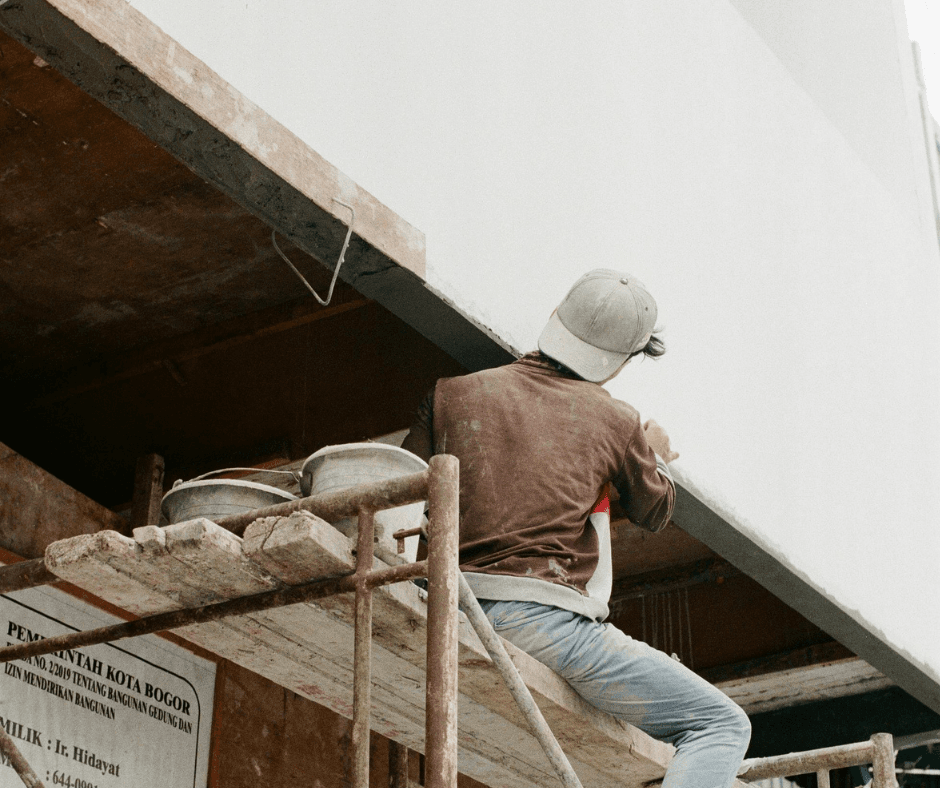
Here are the types of scaffolding we are going to focus on, all relating to residential construction:
- Cantilever: Do you have uneven ground that can’t support most scaffoldings? Well this one is your option. Although it needs quite a bit of safety procedures to put up, it’s a safe option.
- Double: Used mostly for stone masonry and it’s made of the same things as single but doubled up as the name suggests. It is made to hold heavy materials.
- Kwikstage: The pre-built parts are easy to assemble and are probably the most adaptable option that can be constructed into the needed height or odd shapes.
- Patented: Another steel choice, yet it's readily assembled and taken down. It has additional attachments that make it its own kind.
- Pump Jack: This option is a favorite for those who DIY home improvements since it’s versatile and it is easy to adjust the height.
- Single: Made of ledgers, standards, and putlogs, this choice is a usual for brick mason work due to its stability.
- Steel: It’s a light option that can be easily installed inside or outside. Regarded as one of the most used temporary scaffolding options.
- Trestle: A type that is fixed in place yet easily dismantled. It’s one of the popular options for low height construction projects.
Read more details about each type at Alsyed Construction or Sky High Scaffolding.
Why does it matter?
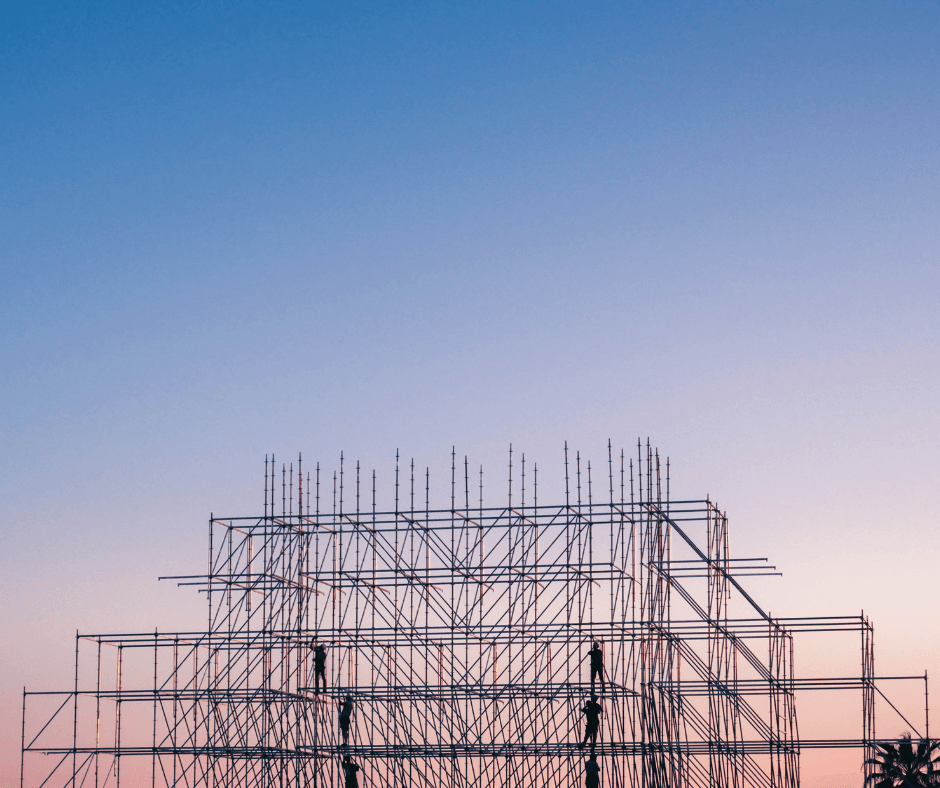
Creating a safe and accessible environment is required for a residential project. Construction workers cannot do their job without scaffolding in a lot of cases, due to the fact that scaffolds can hold people, materials, tools, and more. Sometimes having a ladder just doesn’t cut it. Remember that safety is worth the investment and any company that you hire should be knowledgeable about any scaffolding risks or hazards. In fact, when you are talking to a construction company, you should ask about their protocol for safety. How do they communicate about it? At any time, would their mistakes injure you or damage any of your property? Not to mention the extensive workplace rules and regulations behind scaffolding that are strictly upheld by OSHA. Within their regulations, there are ten different subparts that have subsequent sections to scaffolding regulations within construction. Additionally, OSHA has the right to inspect any project at any time but usually it is triggered by complaints or other things that cause their attention to be garnered to your project.
Is scaffolding for me and my project?
Here are some questions that you can ask yourself throughout this project.
- Will my project access the ceiling?
- Is my project an addition?
- Will I be adding or repairing my roof?
- What height would my project be?
- Where am I anticipating workers to be while they are working?
These questions and more, are a good way to gauge whether you’ll need it. That said, most companies will be in charge of the process of assembling, utilizing, and disassembling scaffolding. When a company handles the project, the cost includes materials, tools, and other resources necessary for completion. To save money on a project, consider choosing a less complex DIY task. For instance, painting is an easier DIY option where scaffolding can be helpful, although a ladder is often sufficient for this specific job.
Scaffolding Safety
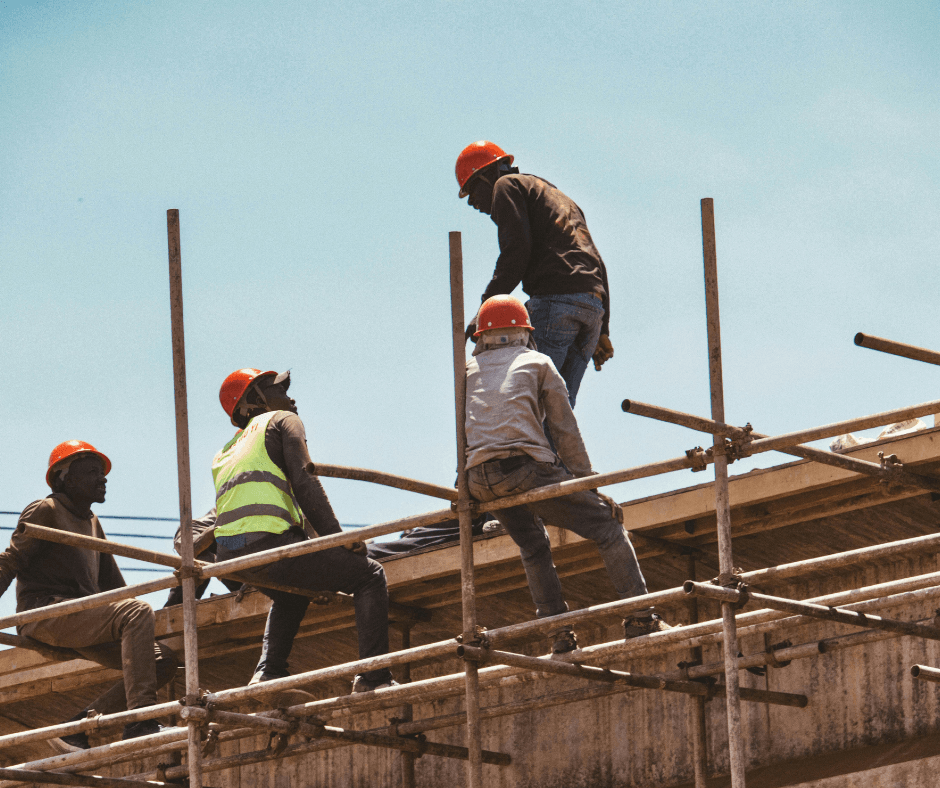
Close to 10% of all construction related accidents are due to scaffolding incidents, according to JourneyMan HQ. That is about 60 people dying per year according to the United States Bureau of Labor Statistics and over 4,500 who end up injured. Within construction, deaths and injuries are regarded with great importance and can impact both the customer and company. No homeowner wants either of those things to happen in their home or on their property and no company wants that for their employees. Additionally, most construction deaths are preventable, which is why safety is emphasized. Being aware, reducing hazards and communicating them, and having options like guardrails to prevent a person or materials from falling are all good ways to stay safe on scaffolding. Most companies are legally required to compensate and take care of an employee if someone ends up injured but that can change if the injury was a result of the owner’s negligence. Examples of that could be tripping hazards that the owner had the power to remove beforehand or if someone got injured due to a homeowner not disclosing a possible risk despite knowing about it.
To learn more about other scaffolding accident information, look at JourneyMan HQ.
Conclusion
Scaffolding can be dangerous but necessary for your projects. By hiring a company that is properly trained, you save yourself time, energy, and protect the people who would be working. This blog covers the types of scaffolding, its importance, and its safety. If at any time you have questions, comments, or concerns, please email [email protected] or comment on the blog. We will get an answer to you as soon as we can. Thank you for reading!
Read more construction blog posts here!
Resources:
- Scaffolding in Construction: Types, Risks, and Hazards
- Scaffolding - Construction | Occupational Safety and Health Administration
- What is Scaffolding in Construction?
- What Is Scaffolding In Construction? 8 Types Of Construction Scaffolding [As Of 2025] | Pollisum
- 10 Most Common Types of Scaffolding: A Comprehensive Guide
- 10 Scaffold Accidents: Injuries and Deaths Statistics Revealed - Journeyman HQ
- 1926.454 - Training requirements. | Occupational Safety and Health Administration
- Scaffolding - Overview | Occupational Safety and Health Administration
0 Comments